THE CITIZEN BLOG
THE CITIZEN BLOG
Stewarding Neighborhood Greenspaces with the Wylde Center
Today, we caught up with our friends at the Wylde Center – one of Hands On Atlanta’s long-standing nonprofit partners doing incredible work in the environmental space for nearly 25 years. We got the inside scoop from Matty Garrett, Wylde Center Greenspace Director, who fills us in on what it takes to operate five greenspaces in four different local neighborhoods, and to keep them open year-round for the community’s benefit.
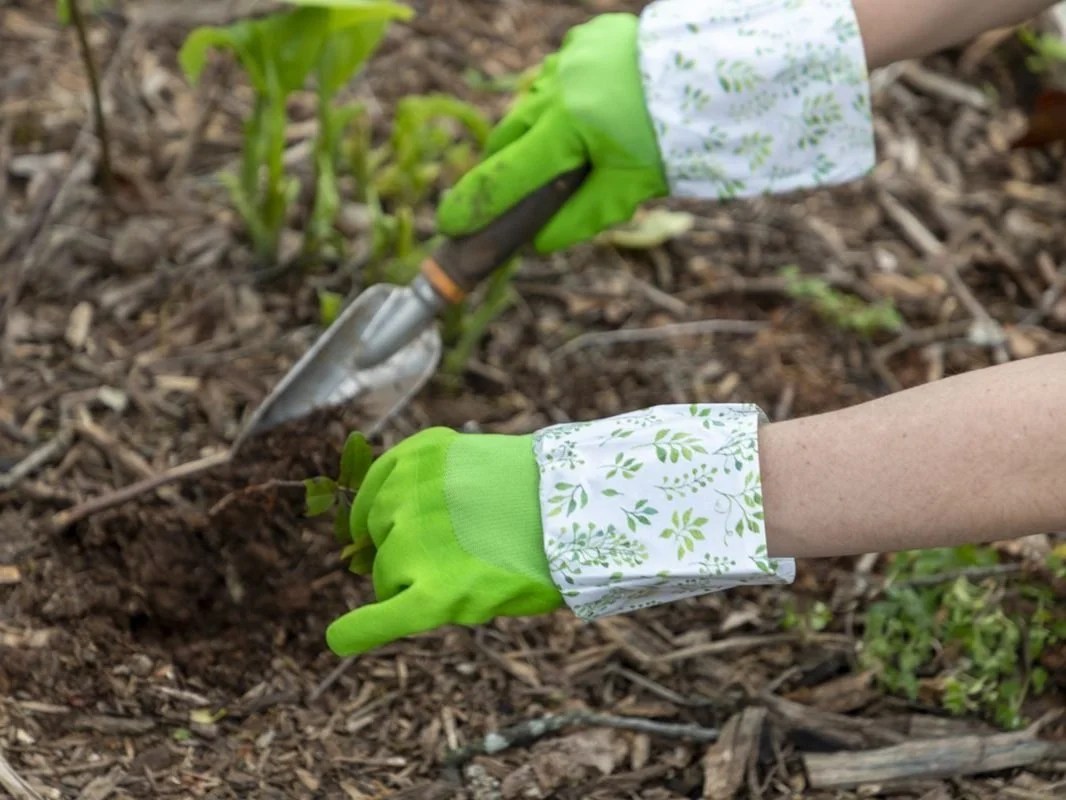
We caught up with our friends at the Wylde Center – one of Hands On Atlanta’s long-standing nonprofit partners doing incredible work in the environmental space for nearly 25 years. We got the inside scoop from Matty Garrett, Wylde Center Greenspace Director, who fills us in on what it takes to operate five greenspaces in four different local neighborhoods, and to keep them open year-round for the community’s benefit. These natural spaces are crucial to the Atlanta landscape, offering a safe haven for natural species and a place for families to convene and to learn… and they rely on Hands On Atlanta volunteers daily.
Sign up here to volunteer + support the nearest greenspace or nature center to you.
Claire, Hands On Atlanta: What’s the story on the Wylde Center? When did you all become established, and why? What was the first greenspace, and how did you get to five?
Matty, Wylde Center: Back in the late 90’s, some Oakhurst residents had a veggie garden that was often trampled unintentionally by the neighborhood kids playing. So, they decided to teach the kids about gardening – and how not to trample plants, as well – and the idea just grew and grew. Today, it is a full blown nursery. Next, the Edgewood Community Learning Garden was established with the support of some local pediatricians. Hawk Hollow was the third addition, a greenspace that preserves native plants along the streambed, and the Sugar Creek greenspace followed. Lastly, Mulberry Fields was created – which is another greenspace embedded in a residential neighborhood between homes, with chickens, goats and garden beds. Now we also partner with Atlanta Public Schools’ rotator building for schools under repairs, next door to the Edgewood greenspace – there’s a teaching garden there, where classrooms of students learn. All spaces arose very naturally, based on interest and need.
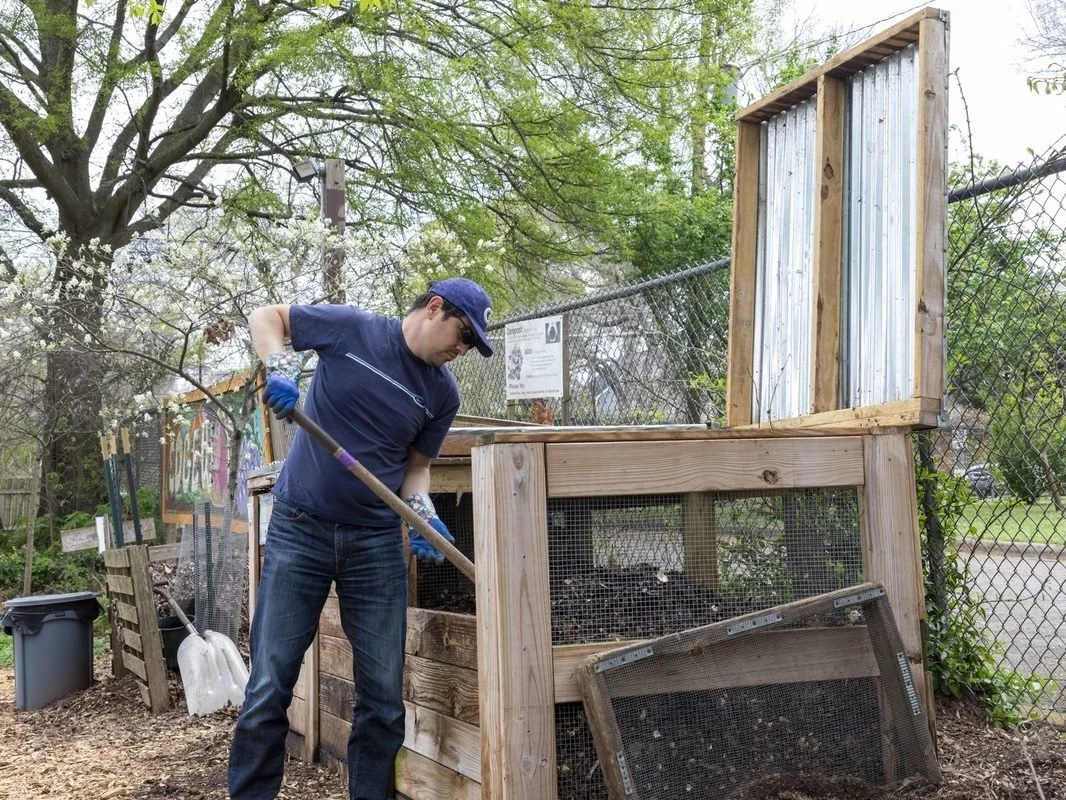
Claire: Greenspaces like this, take hundreds of people – volunteers, mostly, right? – to maintain, on a regular basis. So, what do the volunteers actually do to support the greenspaces? Does it shift throughout the year?
Matty: Yes. We tend to see an uptick in needs and volunteerism in spring and fall, for our plant sales. And the summer is always busy too, but with kids being out of school, we usually have some extra help. Younger kids need a chaperone to serve, but teenagers can serve on their own. We love it, we want them to learn about plants and growing food and preserving natural spaces – that’s how the next generation gets to enjoy our natural environment. It’s fun work, and you learn while you’re there. Kids may not love pulling weeds, but it’s worth it when they later get to feed the chickens, so there’s a balance.
“You can’t put a price on volunteer service... Well, you can, but you don’t have the budget for it.”
Claire: What’s the impact of having so many volunteers? What happens if you don’t have enough? What kind of differences do volunteers make in the greenspaces?
Wylde Center: You can’t put a price on volunteer service… Well, you can, but you don’t have the budget for it. Especially when you’re committed to using sustainable agricultural methods to work with nature, which are way better for the environment but are far more labor intensive. Maintaining the greenspaces, and having them serve as place for families and kids to learn, takes a lot of energy. Trying to keep up with the weeding and mulching in the summer is a lot. We need your help! We’re not after your wallet, but your hands, your back and your knees.
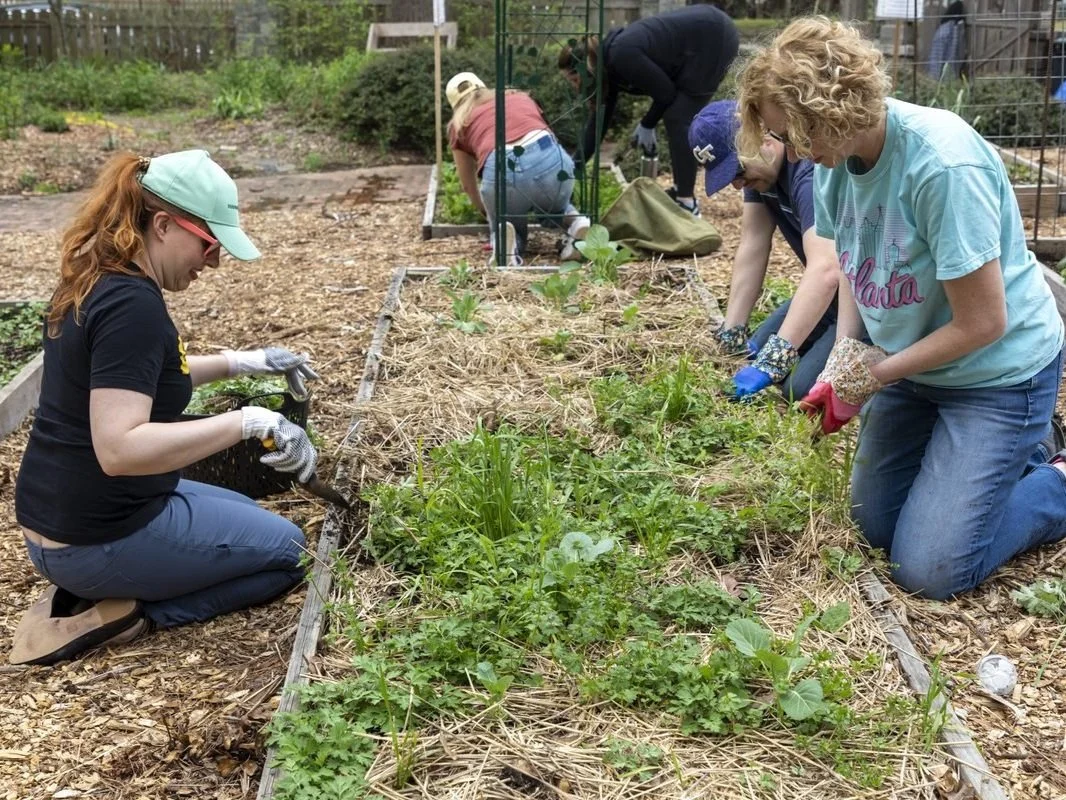
Claire: Many of the Wylde Center greenspaces produce food and plants that community members can buy and then grow for themselves, right?
Matty: Yes! In Mid-April, we have our plant sale and fesitval! We’ll have summer veggies and fruit trees for sale. And we always need volunteers to support regular plant sales and work in the nursery – right now, we’ve got spring veggies and perennials and herbs, and volunteers are the ones who help us get them out to community members. The plant sales are year-round at Oakhurst, there’s always plants or seeds available. We start all of our seeds, they’re uppotted three times before being sold and we’re constantly stocked. It’s a lot to keep up with. Many of our spaces also support their local communities by sharing the harvest with neighbors in need.
Claire: And outside of working in the nursery and supporting the plant sales, how can volunteers help out in the 5 greenspaces?
Matty: Mulberry Fields uses regular volunteers – this is a fun space, with the goats and the chickens. Volunteers are also needed regularly at the Oakhurst Community Garden, Edgewood Community Learning Garden, and Hawk Hollow Garden.
Volunteers are Improving Patient Recovery with Grady Food As Medicine
Through Hands On Atlanta’s special partnership with the Atlanta Community Food Bank, we’re able to support some really strong nonprofits focused on food insecurity. While many organizations focus on keeping bellies full, one special partner – Grady Food As Medicine – is taking a different approach.

Through Hands On Atlanta’s special partnership with the Atlanta Community Food Bank, we’re able to support some really strong nonprofits focused on food insecurity. While many organizations focus on keeping bellies full, one special partner – Grady Food As Medicine – is taking a different approach. Their unique program is designed to ensure patients with chronic illnesses have their nutritional needs met, in an affordable way, which is absolutely crucial to their recovery.
We got to chat with Jasmynne Blacks, Food Pharmacy Manager of the Grady Food As Medicine program, to learn more about how they’re helping patients recover in a holistic way, and how volunteers keep the program up and running.
Sign up here to volunteer + support Grady’s Food As Medicine program.
Claire, Hands On Atlanta: Serving with the Grady Food as Medicine program has been a favorite of our volunteers since you all became a Hands On Atlanta partner a couple of years ago. But this is my first time visiting you in person! What’s the story here, where are we?
Jasmynne, Grady Food As Medicine: This is the Jesse Hill Market! This was a vision that Grady employees had, for the space to become a place of wellness for both patients and employees. We realized that about 50% of our patients are food insecure. Meaning, they’re struggling with access to food, especially fresh produce. And with our background in nutrition, we understand the need for patients to have access to this food, and also the resources and knowledge. Patients are referred to us from Main Grady, after being screened for food insecurity + a few chronic illnesses that would qualify them for participation in the year-long program. We don’t want to just provide food and expect them to figure the nutritional aspects out on their own, we want to give them tools + resources to be successful. Patients attend cooking classes, nutrition classes and also pick up from the Food Pharmacy. During the classes, they learn how to cook to produce and how to become an advocate for themselves – learning their numbers and how to set goals.
“We don’t want to just provide food, and expect them to figure the nutritional aspects out on their own.”
Claire: ‘Prescribing food’ seems like a natural compliment to prescribing medicine and a physical therapy routine, but I haven’t heard of it before. How has it made an impact on patients? Can you speak to results or recovery rates at this point?
Jasmynne: Yes, it’s huge! This is what keeps us going, hearing patient stories. Tomorrow we actually have a graduation! It’s a time to celebrate patients who made a year long commitment to changing their life. Many of them are breaking habits they’ve had for 50, 60 years. We measure things like A1C – certain rates lead to a lot of complications like heart disease, kidney disease and other risk factors. We’ve seen this go down from 10.5 to 5.5. We’ve seen patients be able to go off blood pressure medications. Some have been able to reduce insulin, as their blood sugar goes down. Classes can get emotional as patients reflect back on where they started. Many patients and employees are not just changing their own diet habits, but also those of their families. It’s a big impact.

Claire: You all need about 160 volunteers per month to manage distributions across 4 locations in the city, right? What’s the experience like for a volunteer?
Jasmynne: It’s our 3rd year of running this program, and this program would not run without volunteers. We really mean it! Hands on Atlanta has been pivotal in our program continuing to run, and all volunteer opportunities can be found here. Here at Jesse Hill, we’ve got the Food Pharmacy, and at neighboring clinics we’ve got the Fresh Food Carts. The Fresh Food Carts are massive food distributions in one day, through a partnership with the Atlanta Community Food Bank. These are monthly, at Asa Yancey, Brookhaven, and Ponce – we get lots of produce, and our volunteers are bagging and distributing food. The Food Pharmacy is similar, but food is distributed multiple days weekly. We put together about 150 bags of food every Wednesday. We have fun in the Food Pharmacy, and keep the energy up with a great playlist! Grady employees help out here a lot, too. We currently have about 500 patients in the program, who pick up weekly!, but we’re only a staff of 5, so volunteers are so crucial.
Claire: Oh, wow. And then on top of that, you all also have the Teaching Kitchen here at the Jesse Hill Market.
Jasmynne: The Teaching Kitchen is where patients take classes – and they correlate with available produce at the Food Pharmacy and Fresh Food Carts. Patients get a demonstration and then they’re actually cooking on their own skillet, learning about seasonings and ingredients and modifications. Volunteers are super interactive with patients here, and there’s a required Orientation first. Sometimes there’s 10-15 patients in a class, and it can be a lot for our one teacher to ensure everyone is following along and being safe – so volunteers make a big impact at classes.

Claire: Anything exciting on the horizon for Grady Food As Medicine?
Jasmynne: We’re working on expanding the program! We really want to zone in more on food insecure patients and employees, even those who aren’t affected by the chronic illnesses we’re currently working with.
Claire: Last question… what’s your favorite recipe taught in the Teaching Kitchen?
Jasmynne: Black bean brownies! We were not believers, but then we tried it! They are SO good!
Pajamas, Books, and Sleep Equity: Volunteers Creating Healthy Habits with Pajama Program
Standing in the Pajama Program space feels like being at sleepover at a Barnes and Noble – a true haven for a child’s imagination. Here, program staff and volunteers help children and families establish their nighttime routines, including bedtime stories; the (proven) theory being that how a child performs in the classroom is actually determined the night before, in how well they sleep.
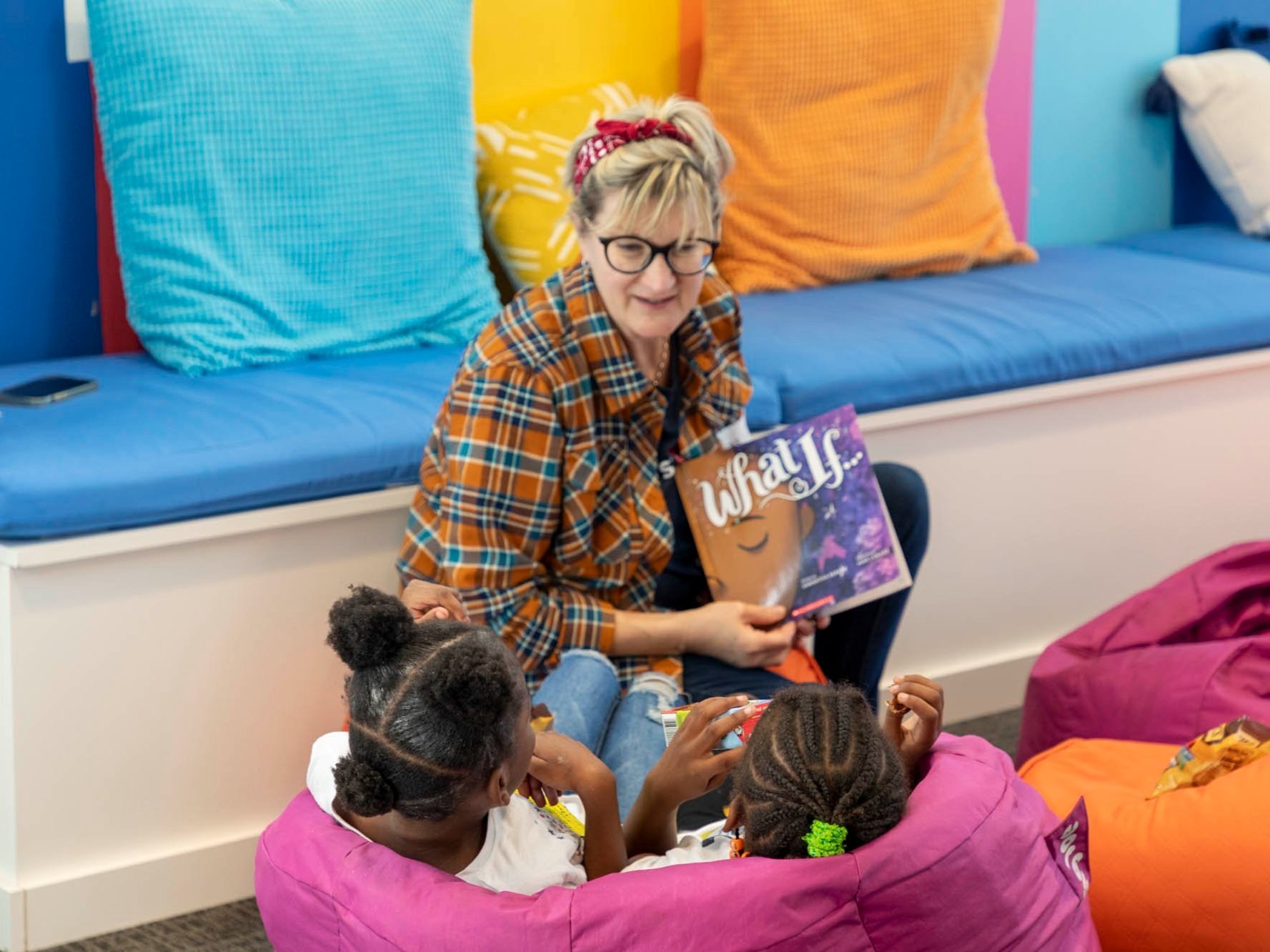
Standing in the Pajama Program space feels like being at sleepover at a Barnes and Noble – a true haven for a child’s imagination. Here, program staff and volunteers help children and families establish their nighttime routines, including bedtime stories; the (proven) theory being that how a child performs in the classroom is actually determined the night before, in how well they sleep.
Hands On Atlanta too has a special focus on ensuring all students get the most out of their education, and is proud to partner with Pajama Program in this work. A conversation with Douna Hunter, Director of Programs at Pajama Program, reveals how their organization is improving educational outcomes for kids in Atlanta, and how you can help them as a volunteer.
TL;DR – Sign up here to volunteer as a reader.
Claire, Hands On Atlanta: Many of us think the Pajama Program is about books and jammies, but it’s really about a much larger concept – sleep equity. Can you talk to us about the importance of a good nighttime routine and what that can mean for a child?
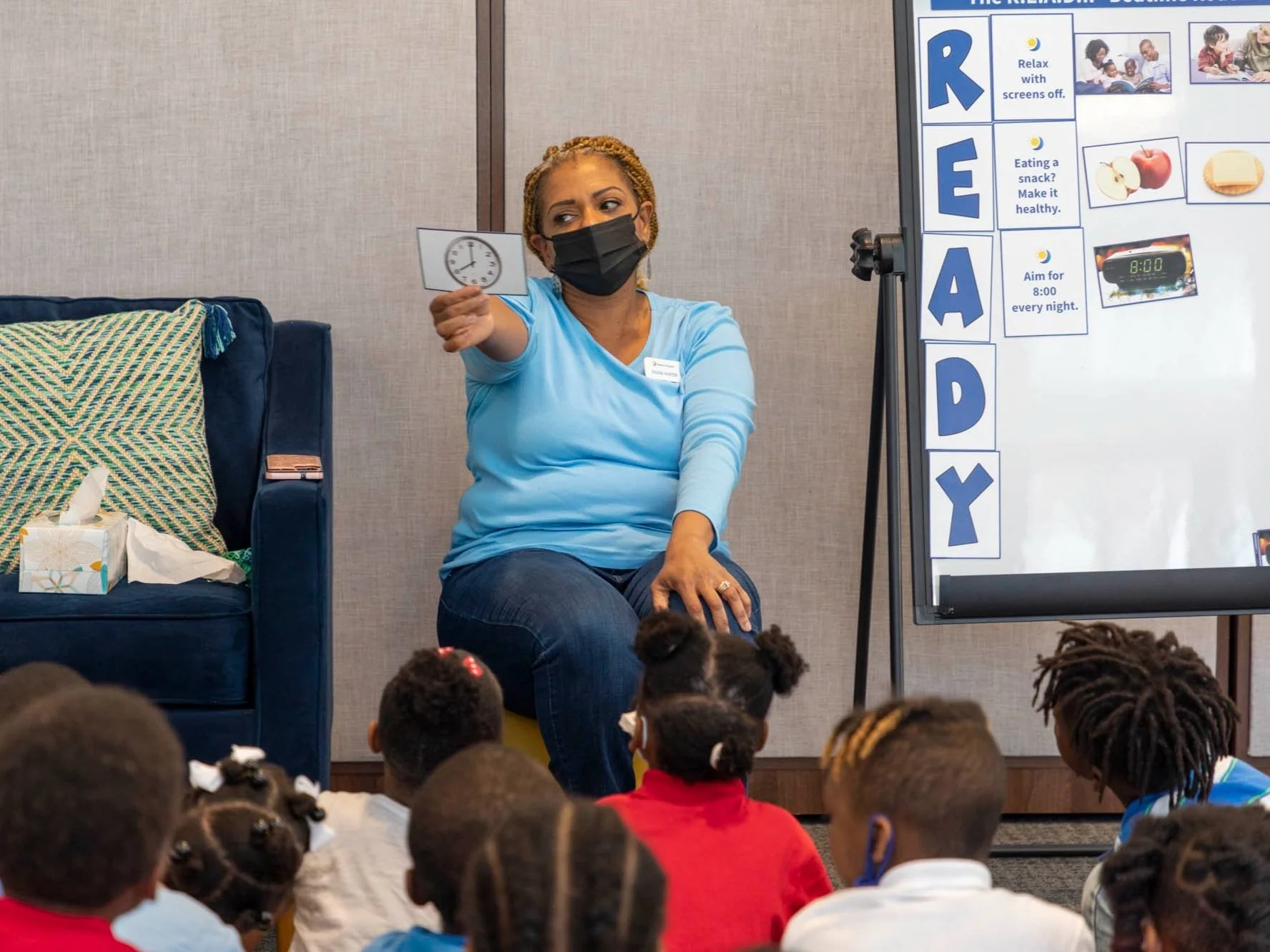
Douna, Pajama Program: Our mission is to promote equitable access to sleep, so all children can thrive. Sleep is up there with exercise and nutrition when it comes to health, but for some reason it just doesn’t get talked about much. Without that foundation of sleep, it’s so much more difficult for students to learn and to turn short term memories into long term memories. It’s easy to think: ‘sleep, everybody does it, what’s the big deal?’ but we’re notoriously sleep deprived in this country. We hear all the time, kids are coming to school sleepy – even the Pre-K kids. Science tells us that parents just don’t know how many hours their kids really need. Healthy sleep starts with a good nighttime routine. We have a triangle of support: programming for students when they visit the center, resources and workshops for parents, and professional development for early educators.
“It’s easy to think: ‘sleep, everybody does it, what’s the big deal?’ but we’re notoriously sleep deprived in this country. ”
Claire: Well, that’s how you truly tackle a problem, head on… by providing support at every level. When the kids visit, they must just love being in this space. It feels like being at a sleepover.
Douna: Our space is magical, it’s full of bright colors and lovely books that are representative of the children that we serve in this community. It’s also a space for volunteers to share those stories with the children that visit that center. A focus of ours is on creating ‘caring connections’. And so that’s how we use our space and our volunteers, in promoting that access – giving our caregivers and community partners resources, like information, pajamas and books.
Claire: I love that concept – because the value of reading is so much more than learning what’s written in the book, it’s about a shared experience. So how do volunteers help with that?
Douna: Volunteers come in and read stories with the kids. Those ‘caring connections’, and the impact of sharing, is what we’re going for. So, for us, it’s not about teaching grammar. We have classrooms come in with 25 kids, and it’s difficult for their one teacher to connect with each one of those children, full time. So here, we can create those connections, and we can teach them about healthy routine. Sharing stories at night is a very important to that routine. It creates space for those connections and preparing the brain for dreams and creativity to happen, and healthy sleep to take place. We want to ensure they’re turning off those devices! Volunteers demonstrate that here. And, caring connections with those outside of their family and caregivers, promotes healthy relationship building with others.
“ Those ‘caring connections’, and the impact of sharing, is what we’re going for. ”
Claire: Pajama Program focuses on kids K-2, and that’s a critical age for learning. They’re absorbing everything around them. Tell us more about the kiddos!
Douna: Pajama Program is a partner of Atlanta Public Schools as well as several county school districts, and kids get to our center on field trips. We see around 3000 kids per year. When we first opened in Atlanta, nearly 6 years ago!, we started getting in touch with local districts. Through mostly word of mouth, people began to realize this is a wonderful, free field trip for students that makes a big difference for the kids. We know a lot of students are going to school very tired, and Pajama Program hopes to change that.
Claire: I heard that there was a student who said this was a better field trip than the Aquarium (!) so the kids must really love coming here, huh? It’s easy to see why!
Douna: YES! He said ‘This is the best day of my life!’ You know, kids who are 6 and 7 can be a little extra and we love it. I think it feels more personal when the kids come in and see the bright colors and the bean bags and the tents and they think, ‘Wow, what is this place? What’s going to happen?’ and they feel the energy and the love here.
Claire: I’ve had a lot of interest from volunteers to support you all. What can we do?
Douna: First – give your time! Come to the center and read, or help fold pajamas. There’s always work! Nonprofits are famous for having a lot of needs, especially smaller organizations like us. The second is donations – we see around 3000 children a year, and each child leaves with a new set of pajamas and a book. Volunteers can donate these or host a drive – we particularly need sizes 6-12 in pajamas. And lastly, let’s talk more about sleep! Parents, find resources on our website, and ask your kid’s schools how they’re talking about sleep.